
RankingsComparison
Mounjaro vs Ozempic: tirzepatide vs semaglutide for type 2 diabetes
Mounjaro and Ozempic are different drugs with diabetes-only labels. Compare the head-to-head trial, labeled uses, weekly doses and $199 to $499 self-pay prices.
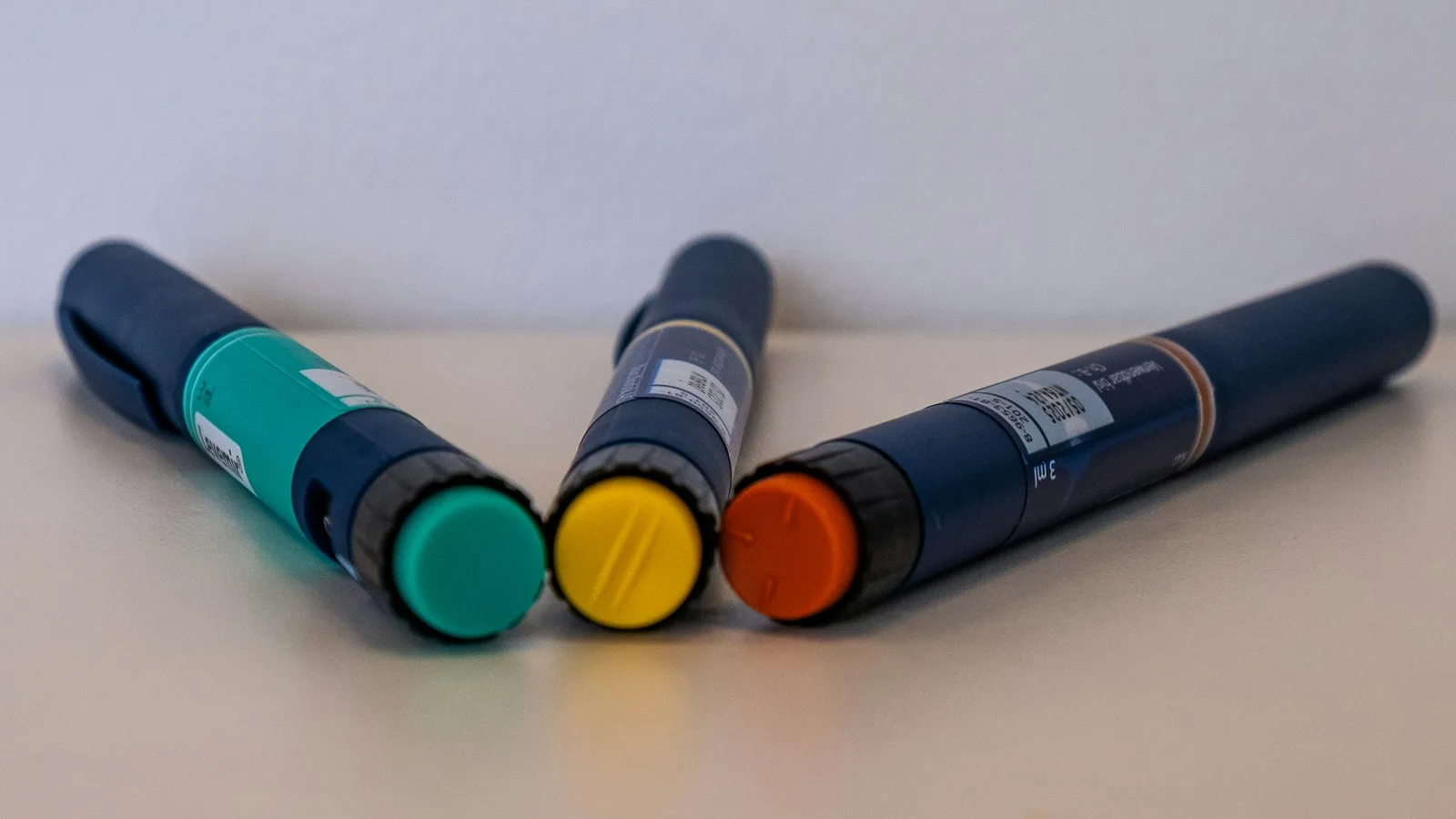
Photo by Julia Taubitz on Unsplash
Updated November 16, 2026. Prices and label details below were checked on the linked pages on November 14, 2026, unless we say otherwise.
Medical disclaimer: This is general information comparing two FDA-approved medicines, not medical advice. Only a licensed clinician can decide whether either one is right for you.
Mounjaro and Ozempic are both once-weekly shots for type 2 diabetes, but they are not the same drug. Mounjaro is tirzepatide from Eli Lilly, which acts on two gut-hormone receptors (GIP and GLP-1). Ozempic is semaglutide from Novo Nordisk, which acts on one (GLP-1).
In the one trial that put them side by side, Mounjaro lowered A1C and weight more than Ozempic 1 mg. Ozempic has more organ-protection uses on its label, including chronic kidney disease, and it usually costs less if you pay cash.
The short answer
- Blood sugar and weight: Mounjaro did better at every dose in SURPASS-2, the head-to-head trial, though that trial used Ozempic 1 mg, not today’s top 2 mg dose.
- Heart and kidneys: Both labels include lowering the risk of heart attack, stroke and heart-related death in certain adults with type 2 diabetes. Only Ozempic’s label adds a kidney-disease use.
- Who it’s for: Mounjaro is approved for adults and children 10 and older. Ozempic is approved for adults only.
- Cost without coverage: Ozempic self-pay runs $199 to $499 a month depending on dose and timing. Lilly’s Mounjaro card for people whose commercial plan doesn’t cover it brings the price as low as $499.
- Weight loss: Neither label is for weight loss. The same ingredients are sold for that as Zepbound (tirzepatide) and Wegovy (semaglutide).
Snapshot
| Mounjaro (tirzepatide) | Ozempic (semaglutide) | |
|---|---|---|
| Maker | Eli Lilly | Novo Nordisk |
| How it works | GIP and GLP-1 receptor agonist | GLP-1 receptor agonist |
| Main FDA use | Blood sugar control in type 2 diabetes, with diet and exercise | Blood sugar control in type 2 diabetes, with diet and exercise |
| Other labeled uses | Lower risk of major heart events in adults with type 2 diabetes at high risk | Lower risk of major heart events in adults with type 2 diabetes and heart disease; slow kidney decline in adults with type 2 diabetes and chronic kidney disease |
| Ages | Adults and children 10 and older | Adults |
| Weekly doses | 2.5 mg start, up in 2.5 mg steps as needed; max 15 mg (10 mg in children) | 0.25 mg start, then 0.5 mg; up to 1 mg or 2 mg as needed |
| Missed dose window | Within 4 days | Within 5 days |
| Self-pay (no coverage) | As low as $499 a month with Lilly’s card if your commercial plan excludes it | $199 for the first two months for new patients, then $349 (up to 1 mg) or $499 (2 mg) |
Sources: Mounjaro prescribing information (revised 8/2026), Ozempic prescribing information (revised 05/2026), Ozempic savings page, Mounjaro savings and coverage. Prices are manufacturer-reported.
Different drugs, both for type 2 diabetes
The Mounjaro label lists two uses. It improves blood sugar control, along with diet and exercise, in adults and children 10 and older with type 2 diabetes. It also lowers the risk of major heart events (heart-related death, nonfatal heart attack or nonfatal stroke) in adults with type 2 diabetes who are at high risk for them (Mounjaro label).
The Ozempic label lists three uses, all in adults with type 2 diabetes: better blood sugar control; lower risk of major heart events in people who already have heart disease; and lower risk of sustained kidney decline, kidney failure and heart-related death in people who also have chronic kidney disease. Its label says safety and effectiveness haven’t been established in children (Ozempic label).
Because they act on different receptors, these aren’t two brands of one medicine the way Ozempic and Wegovy or Mounjaro and Zepbound are. They’re two different options, and you’d take one or the other, not both.
The head-to-head trial: SURPASS-2
SURPASS-2 randomly assigned adults with type 2 diabetes to one of three tirzepatide doses or semaglutide 1 mg for 40 weeks. Lilly funded the trial (NEJM 2021, PubMed 34170647).
- A1C: fell 2.01, 2.24 and 2.30 percentage points on tirzepatide 5, 10 and 15 mg, vs 1.86 points on semaglutide. Every tirzepatide dose beat semaglutide.
- Weight: people on tirzepatide lost 1.9 kg, 3.6 kg and 5.5 kg more than people on semaglutide, by dose.
- Stomach side effects: were similar. Nausea hit 17% to 22% on tirzepatide vs 18% on semaglutide, diarrhea 13% to 16% vs 12%, and vomiting 6% to 10% vs 8%.
- Serious adverse events: were reported in 5% to 7% on tirzepatide and 3% on semaglutide.
One caveat matters. The trial used semaglutide 1 mg, and the Ozempic label now goes up to 2 mg, so SURPASS-2 doesn’t tell you how Mounjaro compares with Ozempic’s top dose.
For context on weight alone, SURMOUNT-5 compared the higher weight-loss doses of the same two drugs in adults with obesity but without diabetes. At 72 weeks, weight fell 20.2% on tirzepatide vs 13.7% on semaglutide (NEJM 2025, PubMed 40353578). Those were Zepbound and Wegovy doses, though, so see our Wegovy vs Zepbound comparison for that question.
Trial averages describe groups, not what any one person will see.
Heart and kidney evidence
The heart claims on each label come from different kinds of trials, so they aren’t directly comparable.
- Ozempic, SUSTAIN-6: In adults with type 2 diabetes at high heart risk, heart-related death, nonfatal heart attack or nonfatal stroke occurred in 6.6% on semaglutide vs 8.9% on placebo (NEJM 2016, PubMed 27633186).
- Ozempic, FLOW: In adults with type 2 diabetes and chronic kidney disease, the risk of major kidney events or kidney- or heart-related death was 24% lower on semaglutide than on placebo, over a median 3.4 years (NEJM 2024, PubMed 38785209).
- Mounjaro, SURPASS-CVOT: In adults with type 2 diabetes and heart disease, a major heart event occurred in 12.2% on tirzepatide vs 13.1% on dulaglutide (Trulicity). That showed tirzepatide was no worse than a drug already proven to protect the heart. The trial compared it to an active drug, not placebo (NEJM 2025, PubMed 41406444).
If kidney disease is part of your picture, that’s a good thing to raise with your prescriber, since only Ozempic’s label has a kidney use.
Doses and how you take them
Both are injected under the skin once a week, at any time of day, with or without meals.
Mounjaro starts at 2.5 mg. If more blood sugar control is needed, the dose goes up in 2.5 mg steps after at least four weeks on the current dose, to a maximum of 15 mg for adults and 10 mg for children. It comes as single-dose pens and vials, a multi-dose vial and a four-dose KwikPen. A missed dose can be taken within 4 days; after that, skip it (Mounjaro label).
Ozempic starts at 0.25 mg for four weeks, then 0.5 mg. If more control is needed, it can go to 1 mg and then 2 mg, each after at least four weeks. For the kidney use, the label’s target dose is 1 mg. It comes in multi-dose pens, and the label also lists single-dose prefilled syringes. A missed dose can be taken within 5 days (Ozempic label).
Novo also sells an Ozempic pill, a tablet form of semaglutide in 1.5 mg, 4 mg and 9 mg strengths, priced at $149 to $299 a month at self-pay (Ozempic savings page). Our Rybelsus cost guide covers how it fits in. For hands-on injection tips, the sister site has guides on how to inject Mounjaro and where to inject Ozempic.
Side effects and safety
The two labels share most of their warnings.
- Boxed warning: Both carry a boxed warning about thyroid C-cell tumors seen in rodents. Both are off-limits for people with a personal or family history of medullary thyroid carcinoma or MEN 2.
- Most common side effects: Nausea, diarrhea, vomiting, constipation and stomach pain on both. Mounjaro’s list also includes decreased appetite and indigestion.
- Shared warnings: pancreatitis, low blood sugar when combined with insulin or a sulfonylurea, kidney injury from dehydration, severe stomach side effects (neither is recommended with severe gastroparesis), gallbladder problems, diabetic eye complications and the risk of inhaling stomach contents during anesthesia. Tell anyone doing a procedure that you take one of these.
- Never share a pen, even with a new needle.
A couple of label differences stand out. Mounjaro can make birth control pills less reliable, so its label advises switching to a non-oral method, or adding a barrier method, for four weeks after starting and after each dose increase. Ozempic’s label says to stop at least two months before a planned pregnancy because semaglutide takes a long time to leave the body (Mounjaro label, Ozempic label).
Read the Medication Guide that comes with your prescription. For day-to-day help with stomach side effects, see managing nausea on a GLP-1.
Mounjaro vs Ozempic cost

What you pay depends far more on your coverage than on the drug’s sticker price.
With commercial insurance that covers it:
- Ozempic: as little as $25 for up to a 3-month prescription, with savings capped at $100 a month, for up to 48 months (Ozempic savings page).
- Mounjaro: as little as $25 for a 1-, 2- or 3-month fill, with savings capped at $150 a month and $1,950 a year. The card expires December 31, 2026 (Mounjaro savings and coverage, as captured November 6, 2026).
Without coverage:
- Ozempic self-pay through NovoCare: new patients pay $199 a month for the first two fills of 0.25 mg or 0.5 mg (offer runs through December 31, 2026). After that it’s $349 a month for 0.25 mg, 0.5 mg or 1 mg, and $499 a month for 2 mg (Ozempic savings page).
- Mounjaro: if your commercial plan doesn’t cover it, Lilly’s card brings a 1-month fill as low as $499 (Mounjaro savings and coverage, as captured November 6, 2026). Lilly also points uninsured buyers to LillyDirect self-pay options, but LillyDirect’s page blocked our price check today, so we’re not listing a figure.
List price: Novo lists Ozempic at $1,027.51 per pen, which is a month’s supply (Novo Nordisk pricing). Novo says that list price drops to $675 on January 1, 2027 (Novo Nordisk). List price is what the maker charges wholesalers, not what most people pay; our list price explainer and GLP-1 cost and pricing guide go deeper.
Medicare, Medicaid and other government plan members can’t use either company’s $25 card.
Coverage and Medicare
Because both are diabetes drugs, coverage usually follows the diagnosis on the prescription. Novo tells Ozempic users that coverage depends on the plan’s formulary, the FDA-approved use, and any prior authorization or step-therapy rules (Ozempic savings page). Our insurance and prior authorization guide explains how that works.
On Medicare, Lilly says about 8 in 10 Part D patients pay $0 to $50 for a 28-day supply of Mounjaro, based on IQVIA data from October 2024 to September 2025 (Mounjaro savings and coverage). Novo says most Part D plans cover Ozempic, with costs that vary by plan (Ozempic savings page). Starting in 2027, Medicare’s negotiated price for semaglutide, including Ozempic, is $274 for a 30-day supply (CMS). Your plan still sets your copay. More in our Medicare and Medicaid coverage guide.
If you’re picking a plan during open enrollment, look up the exact drug on next year’s formulary and note any prior authorization or step-therapy rules.
Questions to ask your prescriber
This isn’t a recommendation, just prompts for a conversation with your own clinician:
- How much more A1C lowering do I need, and does that point to one drug over the other?
- Do I have kidney disease or heart disease that changes which label fits me best?
- Which one does my plan cover for type 2 diabetes, and is prior authorization needed?
- If I’m already on one, what would switching involve, and how would we restart the dose?
- Do I take birth control pills, insulin or a sulfonylurea that would need adjusting?
Only buy FDA-approved tirzepatide or semaglutide through a licensed pharmacy with a valid prescription. The FDA has warned about unapproved and compounded GLP-1 products (FDA), and our guide to filling a GLP-1 prescription safely covers how to check a pharmacy.
Keep reading
- Phentermine vs Ozempic: cost, access and evidence compared
- Rybelsus vs Ozempic: daily pill vs weekly shot, and the Ozempic pill
- Mounjaro vs Zepbound: same drug, different labels and prices
- Ozempic vs Wegovy: same drug, different labels and prices
- Zepbound vs Wegovy: labels, evidence, and cost
- Ozempic vs Zepbound: semaglutide vs tirzepatide for diabetes and weight
- Retatrutide vs Ozempic: what Lilly’s head-to-head results show
- Best FDA-approved GLP-1 drugs ranked
- All our rankings and comparisons
- GLP-1 cost and pricing guide
- On our sister site: Zepbound vs Mounjaro vs Ozempic, how to inject Mounjaro, where to inject Ozempic and managing nausea on a GLP-1
Sources
- Eli Lilly, Mounjaro (tirzepatide) injection, U.S. prescribing information, revised 8/2026: https://uspl.lilly.com/mounjaro/mounjaro.html
- Novo Nordisk, Ozempic (semaglutide) injection, U.S. prescribing information, revised 05/2026: https://www.novo-pi.com/ozempic.pdf
- Novo Nordisk, “Save on Ozempic”: https://www.ozempic.com/savings-and-resources/save-on-ozempic.html
- Novo Nordisk, Ozempic pricing (WAC): https://www.novopricing.com/ozempic.html
- Novo Nordisk, “Wegovy & Ozempic list price reduction” (Feb. 24, 2026): https://www.novonordisk-us.com/media/press-releases/novo-nordisk-lowers-wegovy-ozempic-list-price.html
- Eli Lilly, Mounjaro savings and coverage (captured Nov. 6, 2026): https://mounjaro.lilly.com/savings-coverage (archived copy: https://web.archive.org/web/20261106080113/https://mounjaro.lilly.com/savings-coverage)
- CMS, “Medicare Drug Price Negotiation Program: Negotiated Prices for Initial Price Applicability Year 2027” (fact sheet): https://www.cms.gov/files/document/fact-sheet-negotiated-prices-ipay-2027.pdf
- Frías JP, et al. “Tirzepatide versus Semaglutide Once Weekly in Patients with Type 2 Diabetes.” N Engl J Med. 2021;385(6):503-515 (SURPASS-2): https://pubmed.ncbi.nlm.nih.gov/34170647/
- Marso SP, et al. “Semaglutide and Cardiovascular Outcomes in Patients with Type 2 Diabetes.” N Engl J Med. 2016;375(19):1834-1844 (SUSTAIN-6): https://pubmed.ncbi.nlm.nih.gov/27633186/
- Perkovic V, et al. “Effects of Semaglutide on Chronic Kidney Disease in Patients with Type 2 Diabetes.” N Engl J Med. 2024;391(2):109-121 (FLOW): https://pubmed.ncbi.nlm.nih.gov/38785209/
- Nicholls SJ, et al. “Cardiovascular Outcomes with Tirzepatide versus Dulaglutide in Type 2 Diabetes.” N Engl J Med. 2025;393(24):2409-2420 (SURPASS-CVOT): https://pubmed.ncbi.nlm.nih.gov/41406444/
- Aronne LJ, et al. “Tirzepatide as Compared with Semaglutide for the Treatment of Obesity.” N Engl J Med. 2025;393(1):26-36 (SURMOUNT-5): https://pubmed.ncbi.nlm.nih.gov/40353578/