
RankingsComparison
Mounjaro vs Zepbound: same drug, different labels and prices
Mounjaro and Zepbound both contain tirzepatide. Compare FDA-approved uses, doses, key trials, and Lilly self-pay and savings prices. Not medical advice.
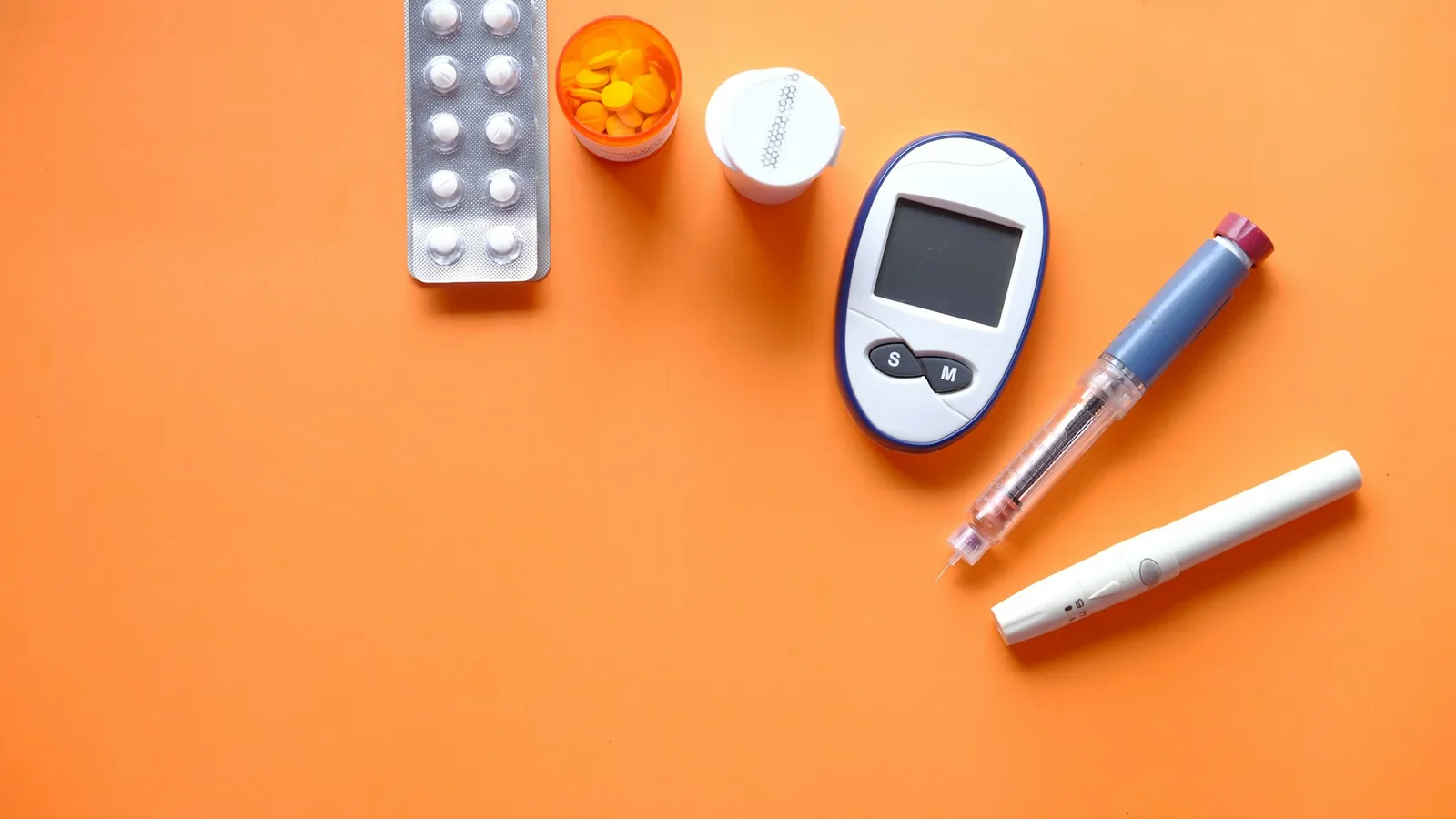
Hero photo by Towfiqu barbhuiya on Unsplash
Updated November 17, 2026.
Medical disclaimer: This is general information, not medical advice. Only your clinician can decide whether either medicine fits you.
Mounjaro and Zepbound contain the same active ingredient, tirzepatide, and both come from Eli Lilly. The difference is what the FDA approved each one to do, which doses each label calls maintenance, and how you pay for it.
Mounjaro is approved for type 2 diabetes. Zepbound is approved for weight reduction and for obstructive sleep apnea in adults with obesity. That split matters more than ever this open-enrollment season, because many employer plans now cover a drug for diabetes but not for weight loss.
Is Mounjaro the same as Zepbound?
Mounjaro and Zepbound are both tirzepatide made by Eli Lilly, but they are not the same product. The FDA approved Mounjaro for type 2 diabetes and Zepbound for chronic weight management and for obstructive sleep apnea in adults with obesity (Mounjaro label, Zepbound label). The two brands are alternatives, not something to take together.
Snapshot
| Mounjaro (tirzepatide) | Zepbound (tirzepatide) | |
|---|---|---|
| Main FDA use | Blood sugar control in type 2 diabetes, with diet and exercise | Weight reduction and long-term maintenance, with diet and activity |
| Other labeled uses | Lower risk of major heart events in adults with type 2 diabetes at high heart risk | Moderate to severe obstructive sleep apnea (OSA) in adults with obesity |
| Ages | Adults and children 10 and older | Adults |
| Weekly doses | 2.5 mg start, then up in 2.5 mg steps as needed; max 15 mg (10 mg in children) | 2.5 mg start for 4 weeks; maintenance 5, 10 or 15 mg (10 or 15 mg for OSA) |
| Forms on the label | Single-dose pen or vial, multi-dose vial, or four-dose KwikPen | Single-dose pen or vial, or four-dose KwikPen |
| Self-pay from Lilly | Starting at $499 a month, every dose | $299 to $449 a month with timely refills, by dose |
Sources: Mounjaro label on DailyMed, Zepbound label on DailyMed, Zepbound on LillyDirect, Mounjaro on LillyDirect. Prices are manufacturer-reported, checked October 29, 2026.
What the FDA labels say
The Mounjaro label lists two uses. It improves blood sugar control, alongside diet and exercise, in adults and children 10 and older with type 2 diabetes. It also lowers the risk of major heart events (heart-related death, nonfatal heart attack or nonfatal stroke) in adults with type 2 diabetes who are at high risk for them (Mounjaro label).
The Zepbound label is built around weight. With a reduced-calorie diet and more physical activity, it is indicated to reduce excess body weight and keep it off long term in adults with obesity, or adults with overweight plus at least one weight-related condition. It is also approved to treat moderate to severe obstructive sleep apnea in adults with obesity (Zepbound label).
The Zepbound label says using it with other tirzepatide products, or with any GLP-1 medicine, is not recommended. In practice, Mounjaro and Zepbound are alternatives, never a pair.
Doses and forms
Both start at 2.5 mg once a week and step up in 2.5 mg increments after at least four weeks on a dose. The difference is the goal of each step.
On Mounjaro, the dose goes up only if more blood sugar control is needed, to a maximum of 15 mg a week for adults (Mounjaro label). On Zepbound, 2.5 mg is only a starting dose. The label names 5, 10 or 15 mg as maintenance doses for weight, and 10 or 15 mg for sleep apnea (Zepbound label).
Both come as single-dose pens and vials and as a KwikPen that holds four weekly doses. Each form has its own instructions, so switching forms is a prescribing decision. For what the first weeks on a GLP-1 tend to feel like, see the sister site’s first month, week by week.
The trials behind each label
These are the peer-reviewed trials most often tied to each label. None compares Mounjaro with Zepbound, because they are the same molecule aimed at different groups.
- SURPASS-2 (Mounjaro, blood sugar): In adults with type 2 diabetes, A1C fell 2.01 to 2.30 percentage points across the three tirzepatide doses vs 1.86 points with semaglutide 1 mg, and tirzepatide beat semaglutide at every dose (NEJM 2021, PubMed 34170647).
- SURPASS-CVOT (Mounjaro, heart outcomes): In adults with type 2 diabetes and heart disease, a major heart event occurred in 12.2% on tirzepatide vs 13.1% on dulaglutide, which showed tirzepatide was not worse than an existing heart-protective drug (NEJM 2025, PubMed 41406444).
- SURMOUNT-1 (Zepbound, weight): In adults with obesity or overweight and no diabetes, mean weight change at 72 weeks was -15.0%, -19.5% and -20.9% on 5, 10 and 15 mg vs -3.1% with placebo (NEJM 2022, PubMed 35658024).
- SURMOUNT-OSA (Zepbound, sleep apnea): In adults with obesity and moderate to severe sleep apnea, breathing interruptions per hour fell by about 20 to 24 more than with placebo at 52 weeks (NEJM 2024, PubMed 38912654).
Lilly has also reported phase 3 sleep-apnea data for Foundayo, its oral GLP-1. That drug is not approved for sleep apnea, and those results are not a Zepbound label trial. See Foundayo’s ATTAIN-OSA results.
Trial averages describe groups, not what any one person will see.
Mounjaro vs Zepbound cost
Lilly sells both through its LillyDirect pharmacy service, but the self-pay prices work differently.
- Zepbound self-pay: LillyDirect lists the same price for the single-dose vial and the KwikPen: $299 a month for 2.5 mg, $399 for 5 mg, and $449 for 7.5 to 15 mg when you refill within 45 days. Miss that window and the regular price is $499 for 7.5 mg and $699 for 10 to 15 mg (Zepbound on LillyDirect, KwikPen self-pay terms). Those card terms end December 31, 2026.
- Mounjaro self-pay: LillyDirect lists Mounjaro at a starting price of $499 a month at every strength, for a prescription written for an approved use (Mounjaro on LillyDirect).
- With commercial insurance: Lilly’s Mounjaro savings card lists as little as $25 for a 1- to 3-month fill when your commercial plan covers Mounjaro, and as low as $499 a month when it doesn’t. The card expires December 31, 2026 (Mounjaro savings and coverage). Medicare, Medicaid and other government beneficiaries are excluded from Lilly’s savings cards (Mounjaro pricing (Lilly)).
Lilly’s pricing page lists Mounjaro at $1,112.16 per fill. That list price is what Lilly charges wholesalers, not what most people pay. Our GLP-1 cost and pricing guide has the full tables.
Why the label decides your coverage
Insurance usually follows the diagnosis on the prescription. A plan can cover Mounjaro for type 2 diabetes and still exclude Zepbound, or any drug, when it’s prescribed for weight loss alone.
That gap is widening for 2027. A WTW survey found 53% of employers with more than 100 workers cover GLP-1s for weight loss, down from 57% in 2025 (CNBC). Walmart, for example, will cover Ozempic and Mounjaro at no cost for eligible employees with type 2 diabetes starting in 2027, with prior authorization, but not when they’re prescribed only for weight loss (SHRM).
If you’re choosing a plan now, look up your exact drug on next year’s formulary and note any prior authorization or “diabetes only” rules.
Questions to bring to a clinician
This isn’t a recommendation, just prompts for a conversation with your own prescriber:
- Is my main goal blood sugar control for type 2 diabetes, weight management, sleep apnea, or more than one?
- Which of these does my 2027 plan cover for my diagnosis, and is a self-pay program cheaper for me?
- Which form, a pen, a vial or a KwikPen, fits my routine and my budget?
- If I’m already on another GLP-1, how would a switch work?
Safety themes both labels share
Because both are tirzepatide, both carry a boxed warning about thyroid C-cell tumors seen in rodents, and both are contraindicated in people with a personal or family history of medullary thyroid carcinoma or MEN 2 (Mounjaro label, Zepbound label). Stomach and gut side effects are the most common, mostly while the dose is going up. Read the Medication Guide that comes with the product.
Only buy FDA-approved tirzepatide through a licensed pharmacy with a valid prescription. The FDA has warned about unapproved and compounded GLP-1 products sold for weight loss (FDA), and our guide to filling a GLP-1 prescription safely covers how to check a pharmacy. For where the FDA stands on compounded versions, see compounded tirzepatide: FDA status and safety.
Keep reading
- Compounded tirzepatide: what the FDA says about legality and safety
- Is there a generic Zepbound? What the FDA says about tirzepatide
- Mounjaro vs Ozempic: tirzepatide vs semaglutide for type 2 diabetes
- Ozempic vs Zepbound: semaglutide vs tirzepatide for diabetes and weight
- Wegovy vs Zepbound: labels, evidence, and price paths
- Ozempic vs Wegovy: same drug, different labels and prices
- Best FDA-approved GLP-1 drugs ranked
- Foundayo reduced sleep apnea episodes in a year-long trial
- GLP-1 cost and pricing guide
- On glp1userguide.com: What GLP-1 medications are, your first month, week by week, and managing nausea on a GLP-1